Tired of long solo drives but love living in Riverstone? With Missouri City’s new METRO Park & Ride and quick access to local tollways, you can trim your daily miles without sacrificing convenience. In this guide, you’ll learn where to park, how the bus works, what it costs, and when toll roads make sense. Let’s dive in.
Riverstone commute snapshot
Riverstone sits in eastern Fort Bend County with direct routes to Fort Bend Parkway, Westpark Tollway, SH 6 and US 59/I 69, which keeps regional access simple for drivers (Riverstone overview). The average commute time in Fort Bend County is about 33 minutes, which is longer than many places in Texas (U.S. Census QuickFacts). Transit trips in the Houston area often take longer than driving, but they can reduce stress and give you time back for reading or email.
Missouri City Park & Ride: what to know
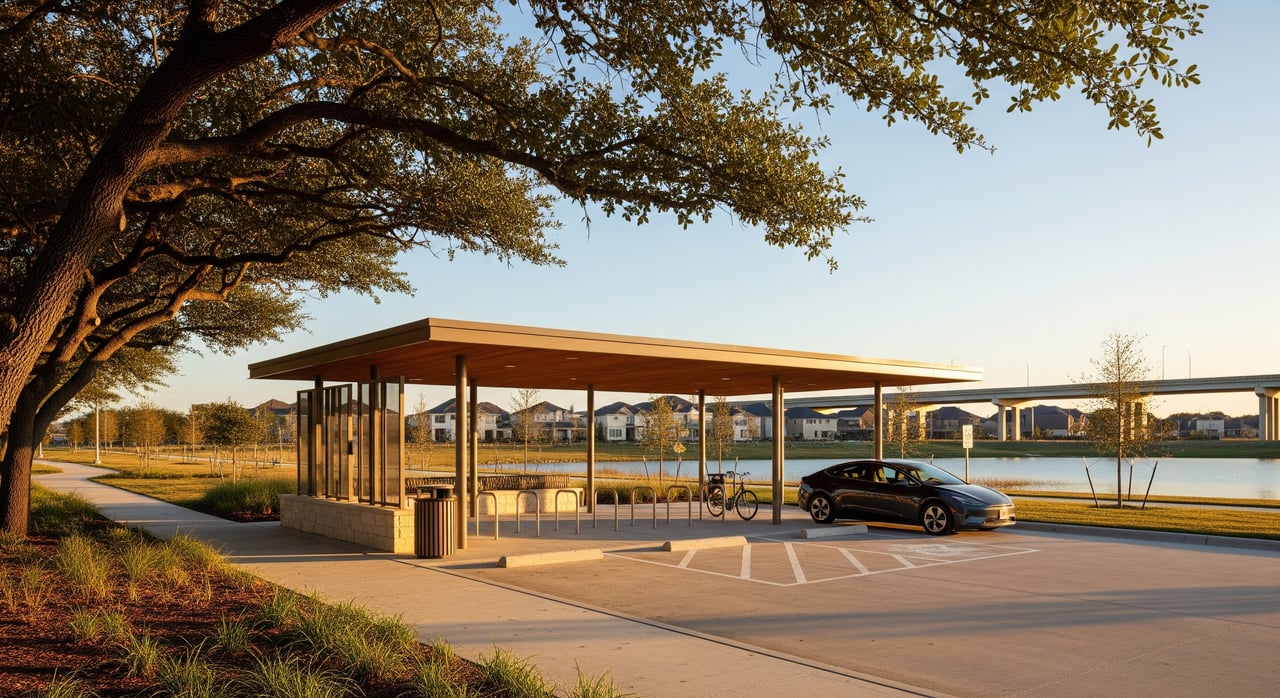
A major new Park & Ride opened at Fort Bend Town Center in January 2025. The facility, located near Fort Bend Parkway and Knight Road, includes 1,750 covered spaces, a covered waiting area, restrooms, and real‑time info displays. It was designed to connect Missouri City and nearby communities to the Texas Medical Center and other METRO hubs (METRO announcement).
Key facts:
- Route: 270 Park & Ride, weekdays with morning and afternoon peak service.
- Frequency: as often as every 10 to 15 minutes in peak windows.
- Time: about 40 to 46 minutes to the Texas Medical Center, depending on traffic.
- Parking: free for riders, open 24/7.
- Fare: typically about $2 to $4.50 one way, depending on zone, paid with a METRO Q Card or mobile ticket (METRO FAQs).
Getting there from Riverstone
If you do not want to drive to the lot, METRO’s curb2curb on‑demand service operates a 363 Missouri City zone that connects to the Park & Ride. You can book trips in the app or by phone, and fares align with local bus pricing (curb2curb route 363 details). If you prefer to drive, plan your door‑to‑door time during commute hours and allow a few extra minutes for parking and boarding.
Where the bus goes
Route 270 is aimed at the Texas Medical Center, with transfers available to rail and local lines for other destinations. For downtown, the Galleria, or the Energy Corridor, expect a transfer and confirm total travel time with METRO’s trip planner or destination pages like the Texas Medical Center overview (TMC transit info).
Microtransit and on‑demand options
METRO curb2curb can handle short first and last mile trips to and from the Park & Ride. In addition, Sugar Land launched a separate on‑demand pilot with $2 rides inside a defined zone. If your address falls within that zone, it can be a low‑cost connector to shopping, medical visits, or a handoff to transit. Check the current service map before you plan a routine using it (Sugar Land On‑Demand pilot).
Tollways that keep you flexible
Even with a car‑light routine, you will likely drive some days. Fort Bend’s toll network helps you move quickly when you need to.
Fort Bend Parkway Toll Road
This is the primary north‑south corridor through Missouri City into Harris County and Beltway 8. Fort Bend County Toll Road Authority operates the county segment. Typical tag‑discounted rates are about 50 to 75 cents per plaza for a two‑axle vehicle. Some facilities do not offer pay by mail, so a toll tag is essential (FBCTRA toll roads and rates).
Westpark Tollway
This east‑west route connects SH 99 to Loop 610 and is helpful for trips toward the Galleria and west Houston. Fort Bend and Harris County agencies split operations along the corridor. Rates vary by plaza and segment (FBCTRA toll roads and rates).
Grand Parkway SH 99
Several Fort Bend segments are tolled, with small per‑plaza rates around the county‑operated sections. SH 99 can be a fast alternative to inner‑loop freeways for cross‑region drives (FBCTRA toll roads and rates).
Toll tags and payments
Texas toll agencies accept interoperable tags, including EZ Tag, TxTag, and TollTag. FBCTRA requires a tag on many facilities and highlights that pay by mail may not be available. Set up autopay to avoid higher fees and keep trips simple (FBCTRA toll roads and rates).
Cost and time tradeoffs
Park & Ride fares typically range from about $2 to $4.50 one way, so around $4 to $9 daily for a round trip. Parking at the lot is free (METRO FAQs). Toll costs add up based on how many plazas you pass. On common Fort Bend routes, you might see roughly $1 to $4 per day in tolls, depending on direction and segments used (FBCTRA toll roads and rates).
Average commute time in Fort Bend County is about 33 minutes, and transit trips can be longer. Many commuters accept a few extra minutes for a more relaxed, hands‑off ride and predictable parking. Regional research also shows commute times have been rising, which makes predictable options valuable when you can use them (U.S. Census QuickFacts, Kinder Institute analysis).
Homebuyer checklist for car‑light living
- Distance to Park & Ride: Map the drive to the Missouri City Park & Ride at Fort Bend Town Center and test it during your usual commute window (METRO announcement).
- First and last mile: Confirm if METRO curb2curb serves your address or if the Sugar Land On‑Demand zone covers your trips (curb2curb details, On‑Demand pilot).
- Toll readiness: If you will drive sometimes, set up a tag and autopay. FBCTRA notes that some roads do not support pay by mail (FBCTRA rates and tag info).
- Work schedule fit: Park & Ride works best with consistent hours that align with peak service windows.
Try your commute before you commit
- Plan door‑to‑door: Compare driving versus Park & Ride plus transfers to your exact workplace. Include toll plazas in the driving route and transfer time on transit.
- Set up fares: Get a METRO Q Card or mobile ticket and do a trial run for a few days to see real travel times and comfort (METRO FAQs).
- Prepare to mix modes: Keep a toll tag active for days you need to drive and use curb2curb for flexible first and last mile support.
Updates and caveats
METRO’s former Star Vanpool program was suspended after a contractor insurance lapse, so do not rely on vanpools without confirming current status (vanpool update). Travel times vary with construction and incidents, so always check current METRO schedules and FBCTRA rate pages before you set a routine.
Ready to align your home search with a car‑light commute? Get local guidance and a tailored plan with David Janssen.
FAQs
How close is Riverstone to the Missouri City Park & Ride?
- The Park & Ride sits at Fort Bend Town Center near Fort Bend Parkway and Knight Road, and your drive time varies by address. Map the trip during peak hours and allow a few extra minutes for parking (METRO announcement).
What does the Park & Ride bus cost from Missouri City to the Texas Medical Center?
- Park & Ride fares typically run about $2 to $4.50 one way, paid with a METRO Q Card or mobile ticket, and parking at the lot is free (METRO FAQs).
Do I need a toll tag to use Fort Bend Parkway and other local tollways?
- Yes, agencies encourage interoperable tags like EZ Tag, TxTag, or TollTag, and FBCTRA notes some roads do not support pay by mail, so set up a tag with autopay (FBCTRA toll roads and rates).
Are there on‑demand options for short trips around Sugar Land and Missouri City?
- METRO’s curb2curb 363 zone connects neighborhoods to the Park & Ride, and Sugar Land operates a separate $2 on‑demand pilot within a defined area, so check coverage before you ride (curb2curb details, On‑Demand pilot).
How long is the bus ride from the Missouri City Park & Ride to the Texas Medical Center?
- Typical trips run about 40 to 46 minutes each way, depending on traffic and time of day (METRO announcement).
Is vanpooling currently available for Fort Bend commuters?
- METRO’s Star Vanpool was suspended due to a contractor insurance issue, so verify any vanpool option directly with METRO before planning around it (vanpool update).